


The Mischief Library: Civilized Self-Destruction
A proper murder file never opens with the body. It opens with the suspect. Who he is, what he wanted, how patiently he worked, and what the neighbors chose not to notice.
The body comes later, and it will keep. Dead things are patient. First you need to meet the gentleman signing the guest book.
I read the books that important people display behind themselves while saying things the books would strongly object to. Most of these volumes spend their lives arranged by height and intellectual intimidation.
I commit the indecency of opening them.
Doomberg named the failure this week on a podcast. Most analysis fails, he argues, because people run too narrow an aperture for incoming information and no systematic way to grade what comes through it.
He is putting that argument in chapter one of a book, which is either irony or proof.
Fifty books a year I read is the aperture. Saturday is the grading system.
Do this often enough and history begins to look less like an ambush and more like a registered letter we refused to sign for.
The warnings were delivered. We simply assumed anything requiring 300 pages wasn’t urgent. In a murder file, that has a name.
Premeditation.
This week, six witnesses describe the same magnificent piece of economic statesmanship.
Magnificent for China, naturally.
The West decided that making things was vulgar. Factories were noisy. Mines were dirty. Electricity involved unpleasant substances. Better to specialize in consulting, financial engineering, litigation, branding, and explaining why nothing could be built before the environmental and climate review.
China took the opposite view.
China looked at coal, the geological equivalent of a full ashtray, and saw dependable electricity. Not attractive electricity. Not electricity suitable for a sustainability brochure. Electricity that arrived when the switch was pressed.
And it used rather a lot of it.
Between 1994 and 2024, China’s annual carbon dioxide emissions from coal rose from roughly 2.38 billion tons to 8.89 billion tons. That is an increase of 6.51 billion tons a year, or 273 percent.
While Western governments were hiring sustainability officers and enforcing pronoun choices, China was adding billions of tons of annual coal emissions and using the electricity to manufacture everybody’s sustainability equipment.
Then it used that power to run the factories we had declared beneath our dignity.
And coal was only the first strategic asset.
China also spent those decades dominating the entire rare-earth chain: mining the ore, separating it, refining it into metals, and turning those metals into the magnets and materials required for MRI machines, Tomahawk missiles, smart bombs, radar systems, drones, submarines, and fighter aircraft.
The F-35 alone requires more than 900 pounds of rare earths.
We outsourced the mine, the refinery, and the permission slip.
The permission slip has a date. December 11, 2001, the day China became the 143rd member of the World Trade Organization. Fifteen years of negotiation, four presidents, both parties, and not one of them was deceived. The terms were published. The hearings were televised. We held the door and called it strategy.
China’s April 2025 export-license system remains in force. The broader controls announced that October are not dead, merely suspended until November 10, 2026.
So the country burning the coal to make our strategic hardware also controls whether the ingredients for our missiles are allowed to leave the country.
We congratulated ourselves on becoming cleaner because the smokestacks were now on the other side of the Pacific. This is rather like improving one’s health by paying a foreigner to smoke one’s cigarettes.
For a time, the arrangement was splendid. We received inexpensive goods and glowing ESG reports. China received the furnaces, machine tools, chemical plants, engineers, ports, suppliers, technical knowledge, and a monthly reminder of precisely how dependent its customers had become.
The six books I pulled off the shelf of my library differ on the details, but together they describe a transfer of power disguised as a sale.
We believed we were shopping.
China understood it was acquiring the store.
That is the suspect.
Motive, means, and a quarter century of patience, every page of it on the public record. Now for the body.

The Murder Nobody Reported
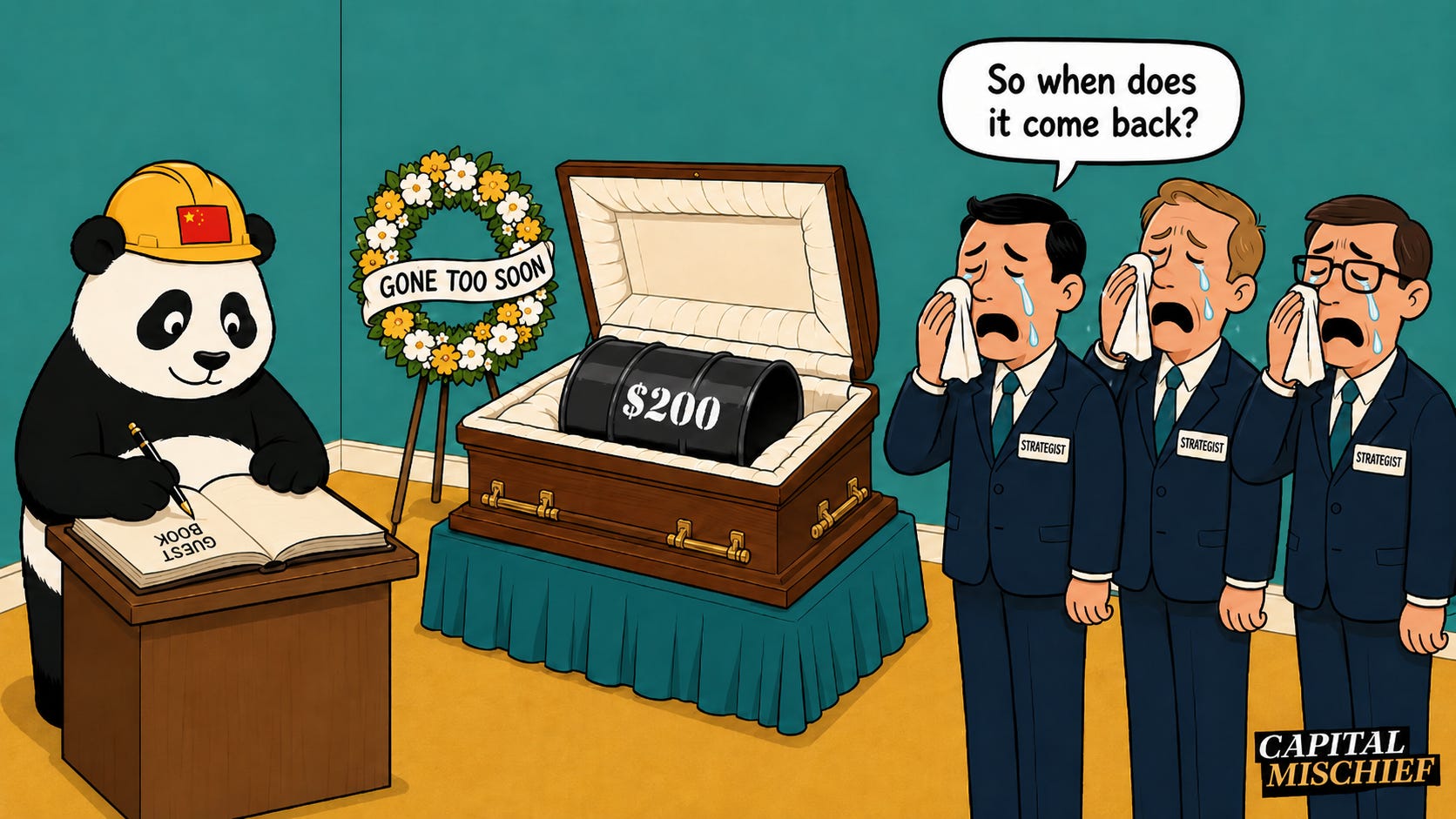
In late February, Iran closed the Strait of Hormuz. Twenty percent of the world’s oil goes through that bathtub drain, and every textbook since Nixon says the price triples.
The textbooks are now available on eBay.
March delivered the largest monthly oil price jump on record, with Brent up 65 percent. By early April, dated Brent for physical cargoes hit $141.36, the highest since 2008. Every strategist on television reached for the 1973 playbook and the $200 target.
Then the body turned up. By June the market that was supposed to be dying of thirst was drowning, the World Bank penciled in Brent averaging $86 for the year, and the strategists moved on to their next confident prediction without attending the funeral of the last one.
You have to admire Wall Street forecasters. These are the only professionals on earth who can miss by a hundred dollars and get promoted.
Your plumber misses by an inch, he fixes it for free. A strategist misses by sixty percent and he is on television Tuesday explaining what the market got wrong.
The market. The thing that is literally the answer key. Got it wrong.
Somebody killed the oil shock, and nobody in the financial press has opened a file. So the Library did. Six witnesses, sworn in below, and a verdict by the end.
Your Homework Is 900 Pages and Still Cheaper Than Your Advisor
Regulars know The Prize already had its Saturday here. Daniel Yergin’s Pulitzer winner is the source code for everything below, and this whole investigation was run using his methods.
So he does not get a seat at the table today. He holds the door, the way Tracy Kidder held it last week.
New arrivals, that book is your homework. Nine hundred pages on how oil built the modern world, and it reads faster than your fund’s quarterly letter.
It is also more honest, though that bar is on the floor.
The Map Your Advisor Trades From Was Drawn When Oil Flowed One Direction. So Did the Fear.
Witness one: The New Map by Daniel Yergin.
Yergin drew the crime scene six years before the crime. The old map had oil flowing from the Persian Gulf westward, with power flowing alongside it, and every American recession since 1973 carrying a Gulf return address.
The new map has America as the arsenal instead of the hostage. The shale revolution turned Texas from a price taker into the world’s swing producer, and it turned the Gulf from America’s lifeline into America’s leverage.
The other half of the new map belongs to Beijing. Yergin gives China’s planners a name for their nightmare, the Malacca dilemma.
The name has an author and a date. In November 2003, Hu Jintao warned senior Party officials that certain major powers were bent on controlling the strait that carried 80 percent of China’s oil through a channel less than two miles wide at the neck. Everything China has done in energy since is a hedge against that map.
Note which strait he named. Hu feared Malacca. Malacca stayed open. Hormuz closed. The fortress held anyway, because a properly built fortress does not care which gate the siege arrives at.
Here is what the new map did to February.
When Hormuz closed, American production was running near 13.6 million barrels per day, the largest in the world and immune to the strait entirely. The risk premium your advisor grew up with was a property of the old map, and properties do not survive their owners.
Energy independence. Politicians have promised it since 1974, the longest running show on Broadway. Here is what nobody says out loud: America mostly got it, China watched us get it, and China drew the correct conclusion.
Independence is not a speech. It is a spreadsheet. We gave speeches for fifty years. They filled in the spreadsheet.
The Only Law Congress Cannot Repeal Is Thermodynamics
Witness two: Energy and Civilization by Vaclav Smil.
Smil is the man Bill Gates reads twice, and this book is his masterwork. Seven hundred pages proving that energy is not a sector of the economy. It is the economy, and everything else is accounting.
His laws are simple and merciless. Energy transitions take generations, not news cycles. No society in recorded history has consumed less energy on its way to a higher standard of living.
And energy density wins every war it enters, which is why coal beat wood, oil beat coal, and nothing yet has beaten oil at moving heavy things long distances.
Now apply Smil to the suspect. The Statistical Review of World Energy shows China consuming nearly 30 percent of the world’s primary energy, with an electricity grid more than twice the size of America’s.
And still, the average Chinese citizen burns less than half the energy of the average American. Every human being on earth wants the American half. That is not an opinion. That is a species-level appetite with a grid attached, and it runs for decades.
One more Smil correction to the popular narrative. More than half of China’s energy still comes from coal, and that is not a policy failure awaiting the right conference. It is geology plus fear, and both outlast communiqués.
The energy transition. We have been transitioning for fifty years, and at some point that is not a transition, that is a lifestyle. Wood took a century to hand off to coal. Coal took another century to hand off to oil.
And here is the punchline: we never stopped burning the old stuff. Humanity burns more wood today than when wood was the whole show. That is not a transition. That is a hoarder with a mission statement.
Japan Got the Siege. China Got the Memo.
Witness three: Bankrupting the Enemy by Edward S. Miller.
This is the witness nobody on your television has read, and it is the one that solves the case.
Miller was a corporate finance man who spent his retirement in the archives reconstructing how America strangled Japan in 1941 without firing a shot. The freeze order that locked Japan out of the dollar system.
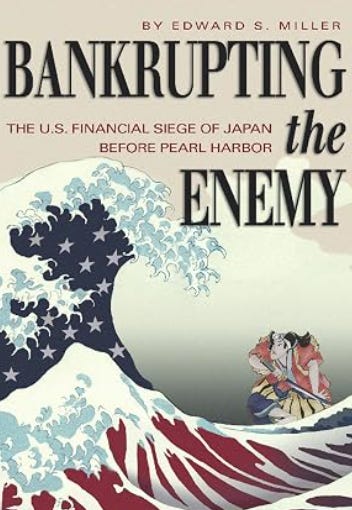
The licensing regime that turned every barrel of oil into a diplomatic hostage. The noose, tightened month by month, by earnest men in Washington who believed economic pressure was the alternative to war.
Tokyo ran the arithmetic. Roughly eighteen months of oil in the tanks. Then capitulate, or strike.
They struck. The siege worked exactly as designed, and the designers never modeled what a cornered industrial power does at month seventeen. There is a memorial in Hawaii for the modeling error.
Now watch Beijing read that file. Not as history. As a checklist of what never to let happen again.
China spent a quarter century pre-purchasing the exit.
The clock started when China became a net oil importer in 1993, and construction began with the reserve program in the Tenth Five Year Plan. The U.S. Energy Information Administration estimates China ended 2025 with nearly 1.4 billion barrels of crude in strategic and commercial inventories.
The barrels are one wall of the fortress. Pipelines from Russia and Central Asia that no navy can blockade. Mandated coal stockpiles at power plants running above 200 million tons, more than a month of the largest coal burn on earth.
The world’s biggest refining complex. Even plants that turn coal into synthetic natural gas at a loss, because per Reuters’ analysis of the buildout, the losses are the premium on the insurance policy.
Read that portfolio as a single position and the doctrine is unmistakable. Resiliency over efficiency, at any price, in every fuel.
China is the only great power in history that prepared for a siege by winning it in advance.
And ours? We call ours the Strategic Petroleum Reserve. Strategic. We drained it to shave a dime off pump prices before a midterm, and in March we tapped what was left in a coordinated emergency release.
That is not a strategy. That is a coupon.
China built 1.4 billion barrels and told nobody the real number, because the entire point of a poker hand is that it is face down. Ours is face up on the table with a press release stapled to it.
The Getaway Drivers Bill by the Barrel
Witness four: The World for Sale by Javier Blas and Jack Farchy.
Two Bloomberg reporters spent years getting the commodity traders to talk, and the result reads like a heist film with an audit trail. Cash in briefcases. Vitol cutting deals in Libya in the middle of a civil war. Glencore everywhere a sanction creates a spread.
These are the men who move the physical world, and they appear in no index fund. Their entire fortune depends on one rule: a shock must never be allowed to become a shortage, because shortages end the game that pays them.
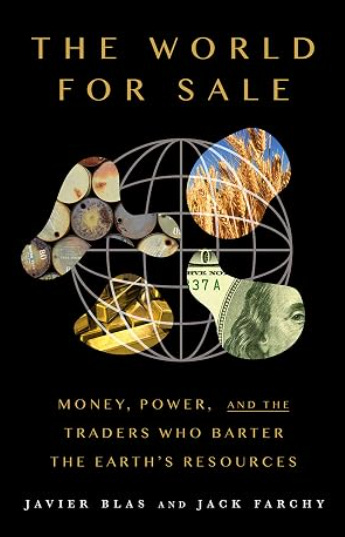
Miller gave you the motive. Blas and Farchy give you the mechanism, because in February the largest oil buyer on earth started behaving like the largest trading house on earth.
Before the war, China was importing about 11.6 million barrels of crude per day. By June, customs data showed imports down 41.3 percent from a year earlier, to 7.12 million barrels per day, the lowest since October 2016.
Refiners kept running by drawing down the stockpile instead of bidding for scarce cargoes. Sit with the arithmetic.
Four to five million barrels a day of demand simply left the auction. That is roughly a third of everything that used to transit Hormuz, withdrawn from the bidding by a single buyer who had spent years pre-paying for exactly this moment.
One more line for the file. That single adjustment accounted for close to three quarters of the entire decline in global crude imports. One buyer. Three quarters of the world’s response. The murder weapon has a serial number.
I am not the only one who got here. Doomberg, who reads Chinese energy data professionally, calls that same four to five million barrels a day of deflected demand the resolution of the entire mystery.
Two of us arrived from different directions. That is either confirmation or a shared delusion, and the customs data votes for confirmation.
So here is the verdict, and you may quote the file.
Who killed $200 oil? The largest buyer on earth walked into the auction, sat on its hands, and quietly sold to itself from inventory. The price did not crash.
It was executed. Premeditated, a quarter century, no appeal.
Your Clean Energy Future Weighs 4 Billion Tons
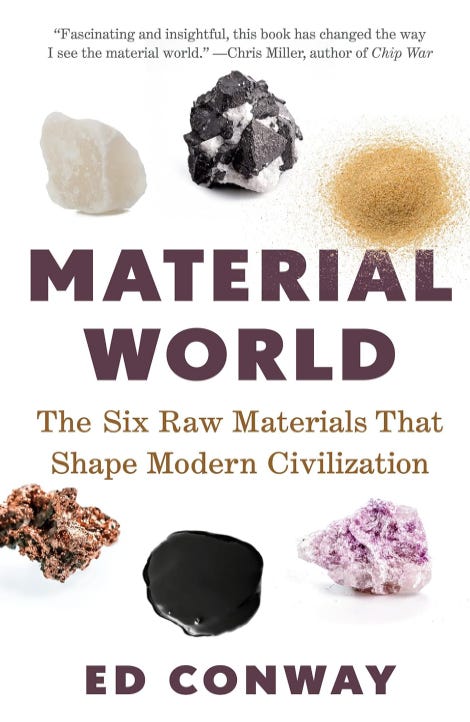
Witness five: Material World by Ed Conway.
Conway follows six materials, sand, salt, iron, copper, oil, and lithium, from the hole in the ground to the device in your hand. The copper chapter alone justifies the cover price, and the whole book is a cure for the fantasy that the modern economy is weightless.
Every clean, digital, frictionless thing you own is a tonnage problem wearing a marketing costume.
Now apply Conway to the next decade, because the murder above was the end of one contest and the opening bell of another.
The Statistical Review puts China’s power generation at more than twice America’s and still compounding. The wires, transformers, turbines, and batteries behind that number are the largest materials order in human history.
And the batteries deserve one honest sentence, because the hype runs in both directions. China has installed roughly half the world’s grid batteries, and Ember’s analysis shows them doing real intraday work.
Run the arithmetic against China’s average load and the entire fleet backs up the grid for something like half an hour.
Half an hour is genuinely useful for balancing. It is not a replacement for fuel. Anyone telling you otherwise is selling you the lettuce.
Which brings me to the phrase itself. Green energy. A wind turbine is nine hundred tons of steel, concrete, and copper, hauled up a mountain by diesel trucks, built in a factory running on Chinese coal.
That is the green part. The energy part works fine. Calling it green is like calling a cheeseburger a salad because there is lettuce on it. I will take the burger. Just do not tell me it is yoga.
America’s Grid Is a Museum That Delivers Electricity as a Side Hustle
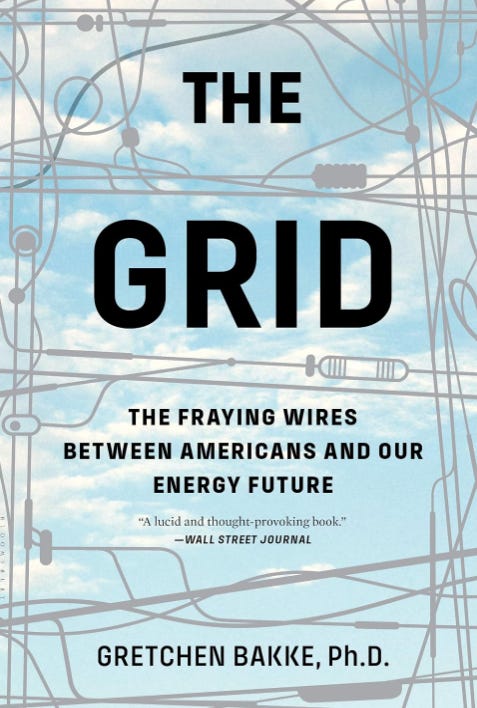
Witness six: The Grid by Gretchen Bakke.
Bakke is an anthropologist, and she wrote the biography of the machine nobody thanks. A century-old patchwork that nobody owns, everybody needs, and everyone assumed would simply always be there, like gravity or the post office.
She published in 2016, before artificial intelligence turned her subject into a national emergency. That makes her prescient rather than trendy, which is the difference between a book worth your Saturday and a book worth an airport.
Here is her thesis meeting this week’s tape. GE Vernova, the largest American turbine maker, just reported a gas turbine backlog of 116 gigawatts, and it is now taking reservations for deliveries in 2031.
A fifth of that demand is data centers. The company expects at least 125 gigawatts under contract by year-end.
Read that again.
In America, the machine that makes electricity is sold out for five years. Goldman’s research desk projects data centers approaching nine percent of peak summer demand next year, and the queue to plug anything into the grid is measured in presidential terms.
Meanwhile the suspect from Section 6 added more generating capacity last year than some G7 countries possess in total.
Bakke’s conclusion, written a decade early, is the investment thesis of this decade. The bottleneck is the business.
Which raises the only question that matters for your own book. If this is the machine everything runs on, why do you own almost none of it?
Five Percent of the Index. Thirty Percent of the Oracle of Omaha.
Energy in the S&P 500 is a rounding error.
As of late July 2026, the Energy sector sits at roughly three percent of the index, and Utilities adds only about two percent more. The entire conventional energy and power complex, oil, gas, pipelines, generators, and regulated wires, barely clears five percent of the benchmark.
Now look at Omaha, on a look-through basis, and the number is roughly 30 percent of deployed equity capital in the same business.
Roughly $35 billion of Chevron and Occidental common stock in the public equity portfolio. About $8.5 billion of Occidental preferred stock yielding 8 percent. And the entire $55 billion book equity of Berkshire Hathaway Energy.
What does that last number actually own?
Open the 10-K and count. 38,800 megawatts of generation. 36,700 miles of transmission. 179,600 miles of distribution line. A pipeline group that moved approximately 15 percent of all natural gas consumed in the United States in 2025. Plus Pilot’s national network of travel centers, which is the downstream molecule delivered to the truck.
That is not a position. That is a utility company with a stock ticker attached.
Two honesties before the argument, because you read this letter for the filter and not the cheerleading.
First, deployed means deployed. Berkshire also sits on a cash pile large enough to buy several countries, and if you put the cash in the denominator, the percentage falls by more than half. The comparison here is capital he actually put to work against capital the index actually put to work.
Second, the two numbers are not the same species. The index weight is public market capitalization. The Berkshire figure mixes public marks with the book equity of a wholly owned subsidiary, and book value almost certainly understates what regulated wires and 15 percent of American gas throughput would fetch at auction.
The asymmetry runs in favor of the argument, which is exactly why it gets disclosed instead of buried.
Now the three moves.
One. Smil told you energy is not a sector, it is the substrate. The index prices the substrate below the category of software that schedules your meetings.
Two. An index weight is a rearview mirror. It records a decade of cheap molecules, and Witness Two spent seven hundred pages explaining why that decade is ending. The Omaha weight is a windshield.
Three. For the family offices reading this, the question was never whether to own energy. The question is whose number your allocation resembles, the index or the man whose holding period matches your grandchildren, and whether you chose that number or inherited it from a committee that has never opened a 10-K.
Where does the next decade’s money get made?
The witnesses already testified, so I will keep it to sectors.
Dense molecules and the companies that produce them. The midstream that moves them. The grid equipment complex with backlogs booked into the next presidency. The uranium fuel cycle feeding the reactor buildout. And the copper that wires all of it, which is Conway’s chapter compounding for twenty years.
One gift before the lawyers make me stop, and it is the single most useful sentence in this file. The oil shock trade of 1973, 1979, and 1990 is impaired for as long as Chinese inventories and OPEC spare capacity stand, which means spikes are for fading, not chasing, until spare capacity actually dies.
I am not your financial advisor and I have no ambition to become one.
Five percent. Everything that keeps the lights on, moves the trucks, heats the houses, and runs the server farms, and the index says five percent. Meanwhile the most patient allocator alive put six times that to work and bought the wires themselves.
One of these two parties has read the annual report. It is not the index.
What Kills This Thesis.
Every file in this Library owns its bear case, so here is the one that keeps me honest.
The last two powers that built energy autarky at any cost were Germany in the 1930s and Japan under embargo, and neither was preparing for a trade dispute.
Adam Tooze’s The Wages of Destruction is the 800-page version of that sentence, and it goes in your endnotes if Miller leaves you wanting the darker sequel.
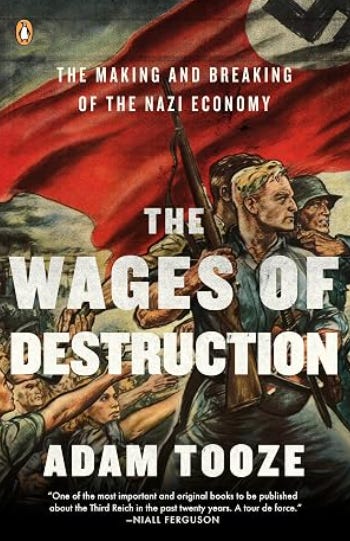
Siege-proofing is what a nation does before it expects a siege. Hold that thought next to every cheerful sentence above.
The market version of the bear case is simpler. If the war reignites and Gulf production is physically destroyed rather than merely rerouted, inventories drain, elasticity fails, and $200 arrives late and angry. Own the hedge you hope expires worthless.
And the second honesty cuts at my own book. The same Chinese cushion that executed the spike also caps the melt-up, because a buyer with 1.4 billion barrels in the tank can sit out any rally he finds offensive. It works both ways, and you should want it to.
The Assignment
Your assignment fits on an index card, in the house tradition.
Write down your energy weight. Then write down whose number it is closer to, the index or the Oracle of Omaha, and whether you chose that number or a committee chose it for you.
The books are my job. I read fifty a year so Saturday hands you what they know, and the links above are there for the one or two you decide you want to live with.
Appetite, not homework.
One wider thought before you go, because the file deserves a proper closing.
The old assumption, the one every strategist priced in February, was that scarcity announces itself with a siren. The new reality is quieter and stranger. The country that prepared longest now decides whether the siren sounds at all.
That is not an oil story. That is the whole regime change, and the six witnesses above have been trying to tell you since page one.
Four Favors Before You Go.
Hit the ❤️. The suspect spent a quarter century on premeditation. You can spare a thumb.
Hit the 🔄 restack. Somebody in your group chat bought oil calls when we just started bombing Iran again and is still explaining the thesis at dinner. Restack this before he averages down.
Hit 📤 share. Everyone knows a man who believes the next war sends oil to $300. Send him the siege section. He can be angry at Edward Miller instead of you.
Drop a 💬 comment. Tell me the price target you were most confidently wrong about. I collect these. It is the only reserve America is still filling.
Somebody forwarded this to you? Then you just watched a murder get solved for free. Formalize the relationship. Every Saturday, free, forever, in your inbox:
May the Mischief be with you.
Charlie

Good post Charlie.
You asked about exposure. I'm ten percent energy across XOM, CNQ., and LNG. Not only is energy the engine that drives a modern economy, it runs inverse to tech ... so a good way to think about it is if I have ten percent in tech, to balance that with ten percent in oil/gas.
Look at Spain. Virtually no heavy industry left. It's a tourist mecca now. Number one tourism spot in Europe and sure, they have gone solar, but the economy is competitively irrelevant.
China. I had a factory in Shanghai. My ops manager was a member of the Communist Party. Every year, they gather at a hotel in Shanghai to strategize. Imagine if all 535 members of Congress, the Executive Branch, SCOTUS, all 50 governors and the heads of the top 50 universities met each year at the Greenbrier to get aligned on the National Plan. THAT ... is what we are up against.
And China doesn't give the top job to a barista. Most of the managers there have deep, deep technical expertise in the areas they are responsible for. PhD's usually and 30 years of increasingly executive capabilities.
We do not appear to have any national plan for AI because we have no idea of where the power is going to come from. China already has Mag trains zooming to the airport.
Oil. XOM had blowout earnings and I expect CNQ will do well on Aug 6 as will LNG.
Tommy Norris ... "Do you have any idea how much diesel they have to burn to mix that much concrete? Or make that steel and haul this s*** out here and put it together with a 450-foot crane? You want to guess how much oil it takes to lubricate that f***ing thing? Or winterize it? In its 20-year lifespan, it won't offset the carbon footprint of making it.
And don't get me started on solar panels and the lithium in your Tesla battery. And nevermind the fact that if the whole world decided to go electric tomorrow, we don't have the transmission lines to get the electricity to the cities. It'd take 30 years if we started tomorrow. And, unfortunately, for your grandkids, we have a 120-year petroleum-based infrastructure. Our whole lives depend on it.
And, hell, it's in everything. That road we came in on. The wheels on every car ever made, including yours. It's in tennis rackets and lipstick and refrigerators and antihistamines. Pretty much anything plastic. Your cell phone case, artificial heart valves. Any kind of clothing that's not made with animal or plant fibers. Soap, f***ing hand lotion, garbage bags, fishing boats. You name it. Every f***ing thing. And you know what the kicker is? We're gonna run out of it before we find its replacement."
Go to a golf course. When clubs offer electric and gas carts, the gas carts are always the first ones chosen.
Second cup.
Charlie
After reading this I am even more convinced China excels in patiently playing the long game. Letting the oil price go to $200 would cause worldwide unrest that evidently was calculated by the Chinese to be detrimental to their economy and national plan. So, adjust consumption to less oil (use substitute fuels) and make more oil available to others. This works for us until they decide it doesn't work for them
The Green/ESG argument has always been a farce perpetuated by deceitful people who obviously are profiting, rather in building windmills or selling carbon credits. Wind and solar can never provide reliable baseline power. EVs push the dirty parts up the chain to the material miners, refiners, and battery makers. Sounds like the JIT fallacy we talked about last week - someone is left holding the environmental bag
Our society has sadly become a nation of posturing phonies, refusing to do the simple analysis that would unravel the Green hoax. I ask those who like Don Quixote believe in the power of windmills to calculate the power requirements to recharge all of the mandated EVs that will be on the road in 10 years and compare to our current available power in our grid. You find there is no way we can build enough windmills and solar panels to meet this demand, and that doesn't even include AI data centers.
I was fortunate to be raised in an era where common sense was more prevalent than today, and by parents who understood the value of hard work. Spending summers with Dr Dirt taught me manual labor isn't an offensive concept. I can do ( and don't find demeaning) many of the home repairs around my house. I know people who need to call a plumber to fix the float valve in their toilet. It's no wonder there is a shortage of skilled tradesmen in our country
I have about 20% of my portfolio in energy related investments but after reading this I wonder why I am underweight in energy.
MFS